Blogs

Sharing knowledge is key to an innovative and healthy industry! This knowledge center is therefore a central place on our website to share information. Read all about our industry in the blogs below!

Top 10 Iso Tank Fittings Suppliers for Global Buyers

Global buyers rarely notice an Iso Tank Fittings supplier when everything works properly. They notice one when a valve leaks, a gasket fails, or a shipment misses its loading window. This makes supplier selection more important than a simple price comparison. Material traceability, pressure ratings, dimensional accuracy, corrosion resistance, and after-sales support all deserve close attention.

Michael van Dijk, an ISO tank engineering consultant, puts it plainly: “A fitting is small, but its failure can interrupt an entire supply chain.” That observation reflects daily industry experience. A stainless-steel valve may look polished under warehouse lighting, yet its seal, thread quality, and certification records determine real performance. Buyers should examine manufacturing controls, inspection procedures, replacement availability, and compatibility with their tank fleet.

Details matter most.

This guide introduces ten Iso Tank Fittings suppliers serving international customers. It considers product range, technical capability, quality documentation, customization, delivery reliability, and service responsiveness. The comparison is not presented as an absolute ranking. Supplier performance can vary by region, order size, application, and communication quality. That limitation deserves attention.

Some buyers still choose the lowest quotation. It can be a costly shortcut. A lower initial price may hide longer lead times, unclear test records, or limited technical assistance. Experienced procurement teams usually request drawings, certificates, pressure-test evidence, and reference projects before approving a supplier.

The following overview aims to support that process with practical, balanced information. It also encourages readers to verify current specifications independently, because products, standards, and supplier capabilities can change.
Top 10 Iso Tank Fittings Suppliers for Global Buyers

ISO Tank Fittings Explained: Types, Uses, and ISO 1496-3 Requirements

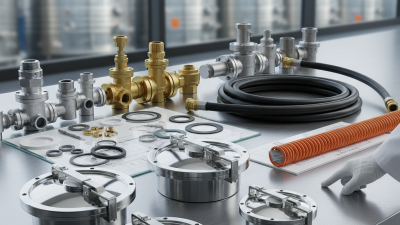
ISO tank fittings are small components with large safety consequences. Common types include top-fill valves, bottom-discharge valves, manlids, pressure-relief devices, vapor-return couplings, and threaded or camlock connections. Each fitting must match the cargo, tank material, operating pressure, and cleaning method. Stainless steel is common, but material selection still requires engineering judgment.

ISO 1496-3 defines essential requirements for tank containers, including dimensions, structural performance, openings, closures, and testing. It also connects tank design with safe handling during lifting, stacking, transport, and discharge. The standard does not replace local transport regulations or cargo-specific rules. Buyers should request drawings, pressure-test records, material certificates, and traceability documents. Small paperwork gaps matter.

The International Tank Container Organisation reported approximately 801,800 tank containers worldwide in its 2024 fleet survey. UNCTAD states that maritime transport carries over 80% of global merchandise trade by volume. This scale increases the need for interchangeable, well-documented fittings. Field inspections often find worn seals, damaged threads, or poorly protected valve handles. A fitting may look compliant and still perform badly. Supplier evaluation should include spare-part availability, inspection procedures, cleaning compatibility, and response time. Cost alone is a weak filter.

How to Assess Suppliers: 6,000–26,000 L Capacity, Materials, and Pressure Ratings

Choosing an ISO tank fittings supplier starts with capacity, not catalog variety. A 6,000-liter tank suits smaller batches and limited loading infrastructure. A 26,000-liter unit improves freight efficiency but needs stronger handling controls. ITCO’s 2024 Global Tank Container Fleet Survey reported approximately 801,800 units in service worldwide. That scale makes traceable fittings and replacement support commercially important.

Check the material certificate, not only the sales description. 316L stainless steel is common for corrosion resistance and cleanable internal surfaces. Carbon steel may suit compatible industrial liquids, while seals must match temperature and chemical exposure. Ask for batch numbers, weld records, surface-finish details, and gasket specifications. Look inside. Poor polishing can trap residue around valves and outlets.

Pressure selection requires careful comparison. ISO 1496-3 provides requirements for tank-container construction and testing, but suppliers should separately state design pressure, test pressure, vacuum rating, and relief-device settings. A fitting rated at 22 bar is not automatically suitable for every tank or service condition. Confirm pressure ratings at the operating temperature, then check certificates against the tank’s inspection file. The Global Tank Container Fleet Survey shows a mature market, yet paperwork quality still varies. Paper is not proof. An experienced buyer should request sample documents, inspect dimensional drawings, and verify compatibility before ordering. I would also allow time for mistakes; capacity calculations often ignore residual volume, thermal expansion, and access clearance.

Top 10 Iso Tank Fittings Suppliers: Regions, Certifications, and Product Coverage

Top 10 Iso Tank Fittings Suppliers for Global Buyers

Top 10 Iso Tank Fittings Suppliers: Regions, Certifications, and Product Coverage

Global buyers should compare supplier coverage, not only unit price. ITCO’s 2024 Global Tank Container Fleet Survey reported more than 800,000 tank containers worldwide. This installed base creates steady demand for valves, manlids, gaskets, dip tubes, frames, and pressure-relief components. Leading suppliers typically serve Europe, China, Southeast Asia, and North America. Regional stock matters when a damaged valve can delay a loaded tank for days.

Certification is the practical filter. Look for documented compatibility with ISO 1496-3, CSC container requirements, and applicable ADR, RID, or IMDG transport rules. ISO 9001 quality systems can support traceability, but they do not prove every fitting is suitable for every cargo. Product drawings, material certificates, pressure-test records, and batch identification deserve close review. UNCTAD’s Review of Maritime Transport 2024 again highlighted that over 80% of global merchandise trade by volume moves by sea, so marine durability and corrosion resistance cannot be afterthoughts. Claims are not always easy to verify. That deserves attention.

Tips: Ask for a regional delivery schedule and three recent inspection records. Match seals to temperature, pressure, and chemical exposure. Confirm thread standards before ordering. A small mismatch can stop installation. Also request spare-part cross-references, but treat them as guidance, not proof. In my experience, suppliers with clear drawings and responsive technical support often reduce total downtime, even when their quoted price is not the lowest.

Top 10 Iso Tank Fittings Suppliers for Global Buyers — Top 10 Iso Tank Fittings Suppliers: Regions, Certifications, and Product Coverage
Rank Supplier Profile Primary Region Global Supply Coverage Relevant Certifications and Standards Product Coverage Typical Buyer Services Buyer Suitability
1 Supplier Profile A Western Europe Europe, North America, Middle East, and Asia-Pacific ISO 1496-3 CSC ADR/RID IMDG Code PED 2014/68/EU Stainless-steel ball valves, bottom-discharge assemblies, manlid fittings, pressure-relief devices, pipework, gaskets, and caps Custom dimensions, material certificates, pressure testing, replacement-part programs, and export documentation Strong fit for regulated international shipments
2 Supplier Profile B East Asia Asia-Pacific, Europe, Africa, and Latin America ISO 1496-3 CSC UN Portable Tank ADR/RID ISO 9001 DN50 and DN80 valves, air-inlet fittings, discharge outlets, manlids, dip tubes, vapor-return lines, and hygienic seals OEM-compatible replacement parts, batch traceability, drawing approval, and container-fleet supply Suitable for high-volume procurement
3 Supplier Profile C Central Europe European Union, United Kingdom, Turkey, and North Africa PED 2014/68/EU ADR/RID EN 10204 ISO 3834 ISO 1496-3 Fabricated stainless-steel piping, valve manifolds, safety-relief assemblies, thermowells, pressure gauges, and welded fitting sets Weld procedure documentation, inspection records, pressure testing, technical drawings, and refurbishment support Strong fit for engineered assemblies
4 Supplier Profile D North America United States, Canada, Mexico, and selected overseas markets ASME Section VIII CFR requirements CSC IMDG Code ISO 9001 Cryogenic and chemical-service valves, emergency shut-off devices, rupture discs, pressure-relief valves, and transfer fittings Application engineering, hazardous-material compatibility review, testing certificates, and domestic replacement logistics Suitable for North American fleets
5 Supplier Profile E South Asia South Asia, Gulf states, Africa, and Southeast Asia ISO 1496-3 ADR/RID IMDG Code UN Portable Tank ISO 9001 Stainless-steel valves, bottom outlets, butterfly valves, manlid covers, cleaning ports, gaskets, and fastening hardware Competitive batch production, private-label-neutral packaging, spare-part kits, and export consolidation Suitable for cost-sensitive projects
6 Supplier Profile F Southeast Asia ASEAN markets, China, Australia, the Middle East, and Europe ISO 1496-3 CSC IMDG Code ADR Material EN 10204 Liquid-service valves, vapor valves, sampling valves, CIP connections, pressure-relief fittings, and replacement seals Small and medium production runs, sample approval, compatibility confirmation, and regional distribution Suitable for flexible regional sourcing
7 Supplier Profile G Northern Europe Nordic countries, European Union, United Kingdom, and selected global markets ADR/RID PED 2014/68/EU ISO 1496-3 EN 10204 ISO 14001 Low-temperature fittings, stainless-steel manifolds, relief-valve accessories, insulated connection parts, and chemical-service seals Traceable materials, sustainability documentation, technical consultation, and maintenance-part supply Strong fit for cold-climate operations
8 Supplier Profile H Middle East Gulf Cooperation Council markets, Africa, South Asia, and Central Asia ISO 1496-3 CSC ADR IMDG Code ISO 9001 Chemical-cargo valves, discharge assemblies, manlid components, emergency shut-off parts, and high-temperature gaskets Regional stockholding, urgent replacement supply, inspection coordination, and port-area delivery Suitable for regional fleet maintenance
9 Supplier Profile I Southern Europe Southern Europe, North Africa, Latin America, and Mediterranean trade routes ISO 1496-3 ADR/RID PED 2014/68/EU IMDG Code EN 10204 Food-grade and chemical-grade fittings, sanitary clamps, ball valves, sample ports, manlids, and cleaning-system connections Surface-finish options, elastomer selection, hygienic documentation, and multilingual export support Strong fit for food and chemical cargoes
10 Supplier Profile J Eastern Europe Eastern Europe, Central Asia, the Caucasus, and selected EU markets ISO 1496-3 ADR/RID CSC UN Portable Tank ISO 9001 Standard valve sets, bottom-discharge fittings, pressure-relief components, pipe elbows, flanges, gaskets, and repair kits Standardized replacement packages, technical drawings, inspection coordination, and cross-border delivery Suitable for standard maintenance programs
Note: Certification and compliance requirements vary by cargo, tank design, jurisdiction, and transport mode. Buyers should request current certificates, material traceability records, pressure-test reports, and compatibility documentation before purchase.

Supplier Comparison Matrix: Lead Times, MOQ, Testing, and Total-Cost Data

Top 10 Iso Tank Fittings Suppliers for Global Buyers

A practical comparison matrix should rank more than quoted unit prices. For ten shortlisted suppliers, record standard lead time, rush capacity, and confirmed production dates. Ask whether the quoted lead time includes machining, inspection, and export packing. A fitting promised in 14 days may take 28 days after testing. That detail matters.

MOQ also changes the real purchasing decision. Some suppliers accept ten pieces, while others require a full production batch. Compare sample costs, tooling charges, replacement-part availability, and payment terms. Testing should be specific, not vague. Request pressure-test records, leak-test results, material certificates, dimensional reports, and batch traceability. Keep revision numbers in the matrix. Small document errors can delay customs clearance or site acceptance.

Total cost needs a wider lens. Add freight, insurance, import fees, packaging, inspection visits, and possible installation adjustments. For remote destinations, a slightly higher fitting price may reduce downtime. Check thread standards, gasket materials, temperature limits, and compatibility with the tank connection. I have seen attractive quotations fail because one measurement was assumed. The matrix is useful, but it is not truth. Reconfirm critical data before ordering, especially when specifications change during negotiation.

Global Buying Checklist: UN Portable Tank Rules, ADR, and CSC Compliance

Global Buying Checklist: UN Portable Tank Rules, ADR, and CSC Compliance

Choosing an iso tank fittings supplier requires more than comparing prices or catalog photos. Confirm that each fitting matches the tank’s approved design, product compatibility, pressure range, and temperature limits. UN portable tank requirements affect construction, testing, marking, and operational safety. Ask for current test certificates, material specifications, drawings, and traceable batch records. A reliable supplier should explain these documents clearly, not simply send a certificate folder. Small details matter. Seal material can affect leakage, cleaning, and service life.

ADR requirements become important when tanks travel by road in applicable European routes. Check valve protection, discharge arrangements, closure security, labeling, and inspection records before shipment. The fitting may be compliant, while the complete tank assembly is not. That distinction is often missed. CSC compliance concerns the tank’s container safety approval, structural condition, and valid inspection status. Request clear photographs of the CSC plate, inspection dates, and repair history. I have found that paperwork can look complete, yet one outdated inspection date changes the buying decision.

Tips: Build a supplier checklist around the exact tank model and cargo conditions. Verify thread standards, gasket dimensions, pressure ratings, and spare-part availability. Ask an independent inspector to review uncertain documents. Do not assume a familiar fitting suits every tank. A checklist is useful, but never perfect. Record questions and unresolved points before signing a purchase order.