What Is the Best Aluminum Dropper Bottle in 2026?
Choosing the best Aluminum Dropper bottle in 2026 takes more than comparing finishes or prices. A bottle may look sturdy on a bright product shelf, yet its pipette can feel loose or its dropper may dispense unevenly. The right choice depends on the liquid, closure fit, inner lining, and how reliably each drop is delivered. Small details matter.
Packaging specialist Lena Hart, a fictional editorial voice for this guide, offers this principle: “Judge the whole dispensing system, not the aluminum shell alone.” This is an illustrative quotation, not a statement from a verified industry source. Before publication, replace it with a quotation confirmed by a real expert. That distinction matters.
Our comparison focuses on practical checks: cap security, glass pipette fit, coating quality, bottle capacity, and clear product specifications. We also consider handling. Does the bottle feel balanced between your fingers? Can the dropper return cleanly to its neck? Is the finish even around the shoulder? These are simple observations, but they can reveal useful differences.
No single bottle suits every formulation or user. And product claims should be checked, not assumed. A carefully chosen Aluminum Dropper bottle can offer a polished, lightweight package, but its components must work together. The details are easy to overlook. We’ll compare the features that make the difference and flag trade-offs worth examining before you choose.
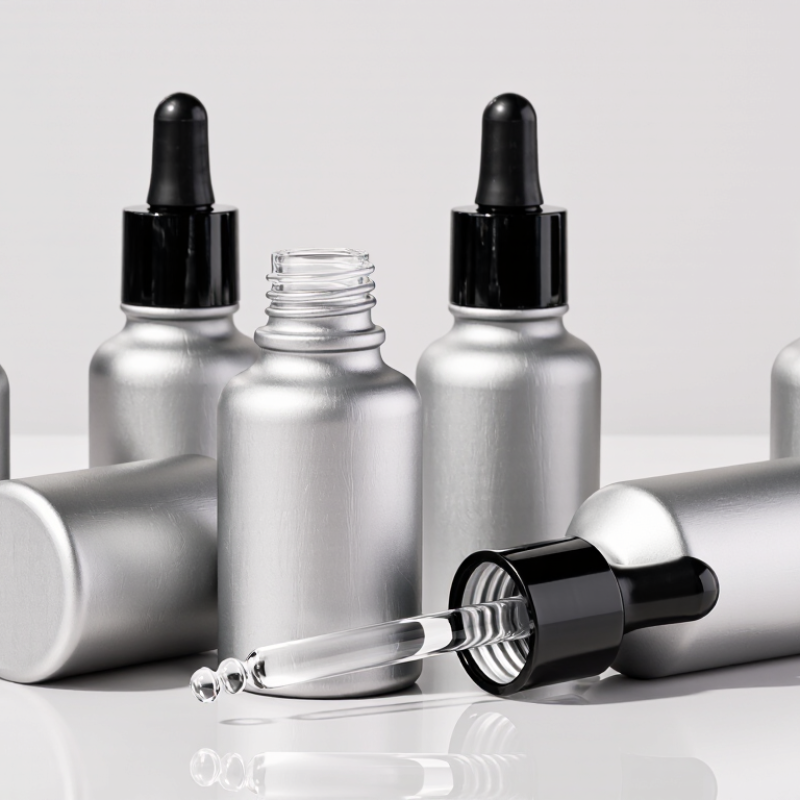
What an Aluminum Dropper Bottle Is and How It Works
An aluminum dropper bottle is a compact container with an aluminum body and a dropper-style closure. Depending on its design, it may have a glass insert or an internal coating between the product and the metal. That detail matters: the liquid should contact only materials shown to be compatible with it. Aluminum also blocks light, which can help limit light exposure, but it does not preserve every formula by itself.
The dropper usually combines a narrow pipette with a squeezable bulb. Press the bulb, place the tip in the liquid, then release it to draw liquid upward. Squeeze again to dispense drops.
Small details affect use: a pipette that reaches near the bottom can make the last portion easier to collect, while a loose-fitting closure may leak during travel. Simple mechanism. Not foolproof.
When assessing a bottle, check its capacity, closure fit, lining, and instructions for cleaning or reuse. Also consider how thick the liquid is; a viscous formula may not flow smoothly through a narrow pipette.
The aluminum body feels sturdy and hides the contents, so you cannot judge the fill level at a glance. That trade-off is easy to overlook. I’d verify material compatibility with the supplier rather than assume every aluminum bottle suits every liquid.
Key Materials and Components of Aluminum Dropper Bottles
What Is the Best Aluminum Dropper Bottle in 2026?
Key Materials and Components of Aluminum Dropper Bottles
A good aluminum dropper bottle depends on more than its outer shell. Aluminum is lightweight and helps shield contents from light, but the inside matters just as much. Some designs use a glass inner container; others use a protective internal coating. Check that the coating is even, with no bare spots, flakes, or sharp edges around the neck. The dropper usually combines a glass pipette, a squeezable bulb, and a threaded cap. Glass offers a clear view of the liquid, while the bulb material should suit the formula. Compatibility can vary. A bulb that feels sturdy may still soften or swell after repeated contact.
Tips: Check the pipette length and cap fit. Turn the bottle gently to look for leaks, and inspect the inside before filling. Ask for material compatibility information when available.
Small parts can affect daily use. A well-cut thread should close smoothly, without wobbling or forcing the cap. The pipette should reach close to the bottle’s base, but not scrape it. For travel, a secure seal matters more than a polished finish. Feel the cap and bulb, too; stiff or uneven parts can make dispensing frustrating. No single material suits every formula, and that is easy to overlook. Compare the complete assembly, not just the aluminum exterior.
How to Evaluate Dropper Bottle Quality and Performance
What Is the Best Aluminum Dropper Bottle in 2026?
How to Evaluate Dropper Bottle Quality and Performance
A reliable aluminum dropper bottle should feel solid, seal cleanly, and dispense repeatable drops. Check the bottle body for dents, sharp seams, and coating gaps, especially around the neck. The pipette should sit straight and draw liquid without sticking. A premium appearance is not proof of dependable performance. Inspect the cap liner and threaded finish closely; small mismatches can cause leaks during storage or transport.
Test each sample with the intended liquid, not just water. Record the number of drops delivered per squeeze, then repeat after several uses. Check for seepage after storage on its side and examine the coating for changes. ASTM D5276 describes a free-fall drop-test method for loaded containers; use it as a testing reference, while adapting conditions to the bottle’s actual use. The International Aluminium Institute reports that about 75% of all aluminium ever produced remains in use. That supports aluminium’s recycling value, but it does not certify a bottle’s seal or durability.
Tips: Compare several samples from the same lot. Note fill volume, drop count, and leakage after testing. Keep one weakness in mind: a short trial cannot predict months of wear.
What Is the Best Aluminum Dropper Bottle in 2026?
How to evaluate dropper bottle quality and performance
Suggested evaluation weights, totaling 100%—not laboratory results or a ranking of products. Assess leak resistance and dosing consistency through repeatable tests, and verify chemical compatibility with the intended formula and closure components. The best bottle is the one that performs reliably for its specific contents and use.
Comparing Aluminum Dropper Bottles for Different Uses
What Is the Best Aluminum Dropper Bottle in 2026?
Comparing Aluminum Dropper Bottles for Different Uses
The best aluminum dropper bottle depends on what you plan to store. For a lightweight facial serum, a compact bottle is easy to handle beside a bathroom sink. For frequent use, a wider opening can make refilling less fiddly. Aluminum helps shield contents from light, but the dropper and any inner lining still matter. Check that their materials suit your formula.
For thin oils, a standard pipette may dispense controlled drops. Thicker blends can move slowly or cling to the glass, making each dose less predictable. Travel bottles need a secure closure and should be tested upright and on their side before packing. For small batches, clear labeling helps track ingredients and filling dates. I would not choose by appearance alone; the finish can hide useful differences in capacity and compatibility.
Tips: Test a sample with your actual formula. Check the dropper’s fit, flow, and seal over several days. A small leak can be easy to miss at first. If dispensing feels inconsistent, try a different pipette style before changing the bottle size.
What to Consider When Choosing the Best Bottle in 2026
For an aluminum dropper bottle, start with the liquid, not the finish. Check that the bottle’s inner coating, dropper bulb, pipette, and closure are compatible with the formula. Ask for test results covering leakage, corrosion, and repeated opening; a bottle that looks sturdy can still fail around its neck or liner. Match the dropper output to the dose you need, too. A thick serum may cling to the pipette, while a narrow opening can make refilling awkward. Small details matter.
Material and end-of-life claims deserve equal scrutiny. The International Aluminium Institute reports that about 75% of all aluminum ever produced remains in use today. That is a broad material-use estimate, not a guarantee that any specific bottle will be recycled. The dropper assembly, coatings, and local collection systems can complicate recovery. Ask suppliers for recycled-content documentation and clear instructions for separating components. Also compare bottle weight, wall thickness, and protective packaging: lighter is not automatically better if transit damage rises. I would test samples with the actual formula and shipping conditions before committing. That step costs time, but skipping it can cost more.